
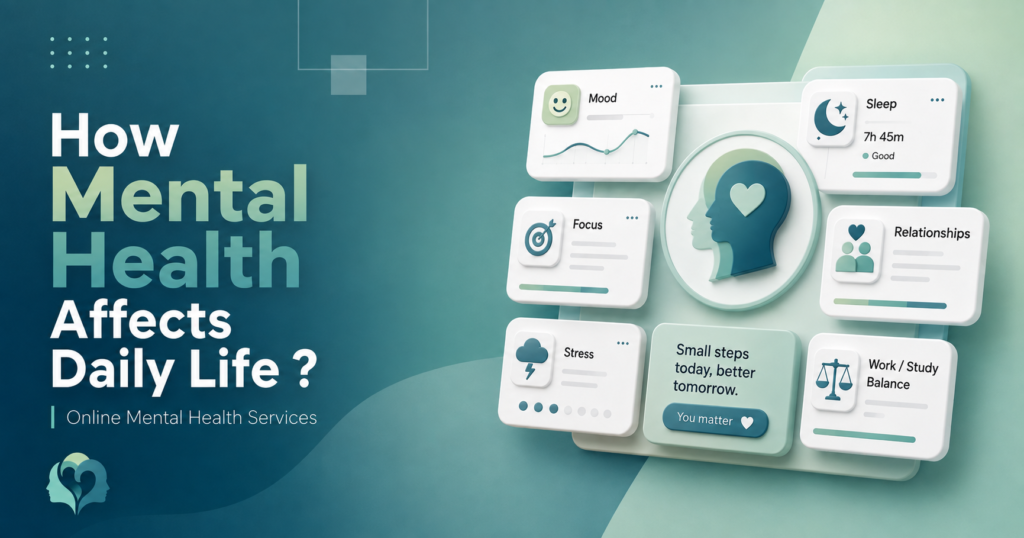
How Mental Health Affects Daily Life ?
Mental health is not just about mental illness—it is about how we think, feel, and handle everyday life. From waking up in the morning to interacting with friends, studying, or working, our mental well-being quietly influences almost everything we do. When mental health is strong, people tend to feel more focused, balanced, and motivated. But when it is struggling, even simple tasks like getting out of bed, concentrating in class, or communicating with others can feel overwhelming. Understanding how mental health affects daily life is important because it helps us recognize early signs of stress, anxiety, or emotional imbalance and take action before things become more serious.
https://www.statista.com/topics/8066/mental-health-worldwide/
What Is Mental Health, and Why Does It Matter?
Mental health is a person’s emotional, psychological, and social wellbeing. It affects how we think, feel, cope with stress, make choices, and interact with others in daily life. Good mental health does not mean feeling happy all the time. It means being able to handle challenges, manage emotions, and continue with daily responsibilities in a healthy way. Mental health matters because it influences almost every part of life. It affects learning, work, relationships, sleep, focus, and physical health. When mental health is strong, people are usually more confident, productive, and resilient. When it is weak, even simple tasks can feel difficult, and stress may build up quickly. Understanding mental health helps readers notice problems early, support others with care, and take practical steps to improve wellbeing. It is an important part of living a balanced, healthy, and fulfilling life.
https://agsjournals.onlinelibrary.wiley.com/doi/abs/10.1111/jgs.16423
How Mental Health Affects Daily Life
Mental health influences the way people think, feel, and behave every day. It affects relationships, school or work performance, decision-making, physical health, and the ability to handle stress. When mental health is balanced, people are usually able to cope with challenges, communicate effectively, and enjoy daily activities. However, poor mental health can make even simple tasks feel difficult and overwhelming.
Emotional Well-Being
Mental health strongly impacts emotions and mood. A person with good mental health is more likely to feel calm, confident, and emotionally stable. On the other hand, stress, anxiety, or depression may cause feelings of sadness, anger, frustration, or fear. For example, someone experiencing anxiety may constantly worry about small situations, while a person dealing with depression may lose interest in hobbies or activities they once enjoyed. These emotional struggles can affect motivation and overall happiness.
https://onlinelibrary.wiley.com/doi/abs/10.1046/j.1365-2214.2003.00341.x
Relationships With Others
Mental health also plays a major role in how people interact with family, friends, classmates, and coworkers. Positive mental health helps people communicate clearly, show empathy, and build healthy relationships.
When mental health problems are ignored, people may become withdrawn, irritated, or overly sensitive. Misunderstandings and conflicts may increase because emotions become harder to manage. Strong social support and open communication can improve both mental and emotional well-being.
Performance at School or Work
A healthy mind improves concentration, memory, creativity, and productivity. Students with good mental health often find it easier to focus during lessons, complete assignments, and participate confidently in class.
Poor mental health can reduce energy and attention, making it difficult to learn or complete tasks. Stress and emotional exhaustion may lead to lower performance, missed deadlines, or lack of motivation. Taking breaks, managing time wisely, and seeking support when needed can help improve performance.
Physical Health and Energy Levels
Mental health and physical health are closely connected. Emotional stress can affect sleep, appetite, energy levels, and even the immune system. People struggling with mental health issues may experience headaches, fatigue, body pain, or changes in eating habits. For instance, constant stress may lead to poor sleep, while lack of sleep can increase feelings of anxiety and irritability. Regular exercise, balanced nutrition, and proper rest can support both mental and physical health.
https://link.springer.com/article/10.2165/00007256-200029030-00003
Decision-Making and Daily Activities
Mental health affects how people think and make decisions. When someone feels mentally well, they are more likely to solve problems calmly and make thoughtful choices. Poor mental health can make decision-making harder. Simple responsibilities such as studying, completing chores, attending meetings, or managing personal hygiene may begin to feel overwhelming. Building healthy routines and asking for help can make daily life more manageable.




Effective Strategies to Improve Mental Health
Improving mental health takes time, consistency, and small daily efforts. While there is no single solution that works for everyone, building healthy habits can make a meaningful difference in mood, energy, focus, and overall wellbeing. Here are some effective strategies that can help.
1. Maintain a Healthy Daily Routine
A steady routine gives your day structure and reduces stress. Try to wake up, eat, study, work, and sleep around the same time each day. Predictable habits can make life feel more organized and manageable.
2. Get Enough Sleep
Sleep is essential for mental wellbeing. Poor sleep can increase irritability, stress, and difficulty focusing. Aim for a regular sleep schedule and create a calm bedtime routine.
3. Stay Physically Active
Exercise supports both the body and the mind. Even simple activities like walking, stretching, cycling, or dancing can help reduce stress and improve mood.
4. Eat Balanced Meals
Food affects how you feel and think. A healthy diet with enough water, fruits, vegetables, protein, and whole grains can support better energy and emotional balance.
5. Limit Stress Triggers
Try to notice what increases your stress, such as overworking, too much screen time, or constant negative content. Reducing these triggers can help protect your mental health.
6. Practice Mindfulness and Relaxation
Deep breathing, meditation, prayer, or quiet reflection can help calm the mind. These practices are useful for reducing anxiety and staying present in the moment.
7. Stay Connected with Supportive People
Talking to trusted friends, family members, or mentors can ease emotional pressure. Supportive relationships help people feel understood and less alone.
8. Take Breaks from Screens
Too much social media or screen time can lead to mental fatigue and comparison. Taking regular breaks can improve focus and reduce stress.
9. Set Realistic Goals
Break large tasks into smaller steps. Achievable goals can build confidence and prevent feelings of overwhelm.
10. Seek Professional Help When Needed
If stress, sadness, or anxiety becomes difficult to manage, speaking with a counselor, therapist, or doctor can provide helpful support and guidance.
Closing:
In the end, mental health is a vital part of everyday life, shaping how we think, feel, connect with others, and handle challenges. When we care for our mental well-being, we give ourselves a better chance to learn, grow, and live with more balance and confidence. The most important takeaway is simple: mental health matters, and small daily actions can make a meaningful difference. For more support, explore the related articles and wellness resources available on our website to keep building healthy habits and a stronger mindset.