Talk to a Mental Health Professional
When Should You Talk to a Mental Health Professional?
Talk to a Mental Health Professional Read More »


When Should You Talk to a Mental Health Professional?
Talk to a Mental Health Professional Read More »
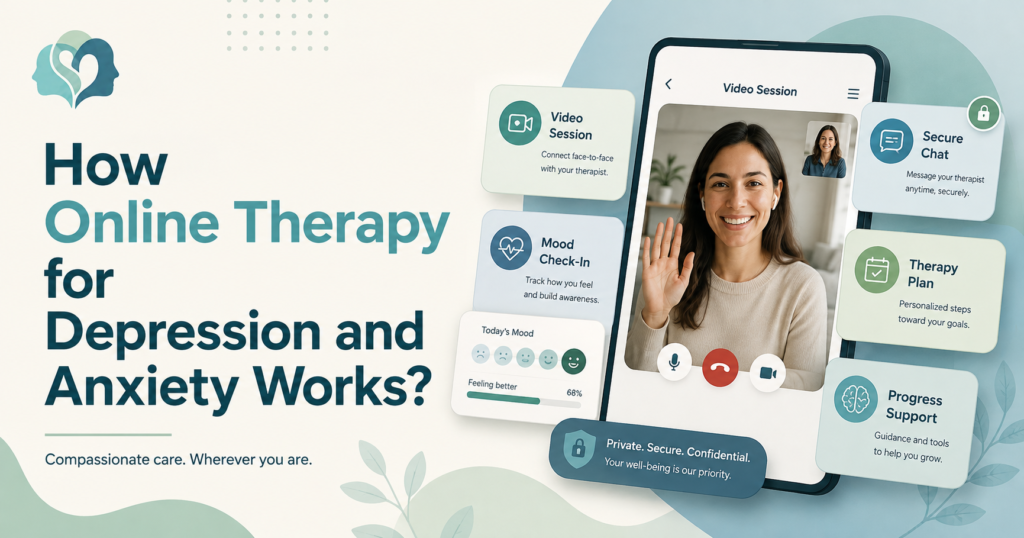
How Online Therapy for Depression and Anxiety Works Introduction Depression and anxiety can affect concentration, sleep, motivation, relationships, academic performance, and everyday responsibilities. Yet getting psychological support is not always easy because of distance, busy schedules, limited local services, or difficulty attending regular in-person appointments. Online therapy for depression and anxiety provides a way to connect with a qualified mental health professional through secure video or other approved telehealth methods. The National Institute of Mental Health (NIMH) notes that virtual mental health care can be effective for conditions including depression and anxiety. In this post, we’ll explain why online therapy for depression and anxiety is important, how online therapy works step by step, and provide 8 practical points to understand if you’re new to online psychological support. https://missionconnectionhealthcare.com/mental-health/depression/online-therapy/. What Is Online Therapy for Depression and Anxiety, and Why Does It Matter? Online therapy is psychological treatment provided remotely by a qualified mental health professional, most commonly through video sessions. It may involve approaches such as Cognitive Behavioral Therapy (CBT), interpersonal therapy, behavioural activation, problem-solving therapy, or other evidence-based psychological interventions, depending on the person’s needs. The World Health Organization (WHO) confirms that psychological treatments for depression may be provided in person or online, and identifies CBT, behavioural activation, interpersonal psychotherapy, and problem-solving therapy among effective approaches. For anxiety disorders, WHO also states that psychological interventions can be delivered online and highlights CBT-based approaches as having strong evidence across several anxiety disorders. Online therapy matters because it can make professional psychological support easier to access. However, it is important to understand that online therapy is a method of delivering treatment—not one specific treatment itself. The quality of care still depends on factors such as professional qualifications, appropriate assessment, the therapy being used, and whether virtual treatment is suitable for the individual. https://psychiatryonline.org/doi/full/10.1176/appi.ps.201400477 How Online Therapy for Depression and Anxiety Works: 1. You Start by Seeking Professional Support The first step is finding an appropriately qualified mental health professional or service. Rather than choosing a service simply because it offers quick access, check the professional’s credentials, experience, therapeutic approach, and whether they commonly work with depression or anxiety. This distinction is important because a general wellness app, chatbot, or self-help program is not automatically equivalent to professional psychotherapy. NIMH notes that although digital mental health technologies offer opportunities, the effectiveness and oversight of mental health apps can vary considerably. https://www.cambridge.org/core/journals/psychological-medicine/article/abs/internetbased-cognitive-behaviour-therapy-for-symptoms-of-depression-and-anxiety-a-metaanalysis/251608942E066BB9F3F0335341B65CDF 2. An Initial Consultation Helps Identify Your Needs Online therapy usually begins with an initial consultation or assessment. During this conversation, the therapist may ask about: Current concerns and symptoms How long difficulties have been occurring Sleep, concentration and daily functioning School, university, work or relationship pressures Previous psychological treatment Current goals for therapy The purpose is not simply to attach a label to someone’s experience. It is to understand what is happening, how it is affecting daily life, and what type of support may be appropriate. Online therapy usually begins with an initial consultation or assessment. During this conversation, the therapist may ask about: Current concerns and symptoms How long difficulties have been occurring Sleep, concentration and daily functioning School, university, work or relationship pressures Previous psychological treatment Current goals for therapy The purpose is not simply to attach a label to someone’s experience. It is to understand what is happening, how it is affecting daily life, and what type of support may be appropriate. 3. The Therapist Develops a Treatment Plan After understanding the person’s concerns, the therapist can develop an individualized treatment plan. For example, one person experiencing anxiety may need help understanding anxious thinking and gradually confronting situations they have been avoiding. Someone experiencing depression may focus more heavily on rebuilding routines, increasing meaningful activities and challenging patterns of unhelpful thinking. Treatment therefore should not follow exactly the same formula for everyone. NIMH identifies CBT and interpersonal therapy among evidence-based psychotherapies used for depression and notes that psychotherapy can be effective when provided virtually through telehealth. 4. Regular Online Therapy Sessions Begin Sessions are typically scheduled at agreed intervals depending on the treatment plan and individual circumstances. During a session, the therapist and client may explore emotions, thoughts, behaviours, stressful situations and patterns affecting everyday life. Although the conversation takes place remotely, structured psychological therapy still involves therapeutic goals and evidence-based techniques rather than simply discussing problems. NIMH reports that virtual mental health care can be effective for conditions including anxiety and depression, although suitability can vary between individuals and situations. https://www.sciencedirect.com/science/article/abs/pii/S0149763404000375 5. You Learn to Recognize Unhelpful Patterns An important part of many therapies is developing greater awareness of connections between: Situation → Thoughts → Emotions → Behaviour For example, a person might interpret one mistake as evidence that they are going to fail completely. That interpretation may increase anxiety and lead them to avoid the situation altogether. Therapy can help people examine these patterns more carefully and develop healthier ways of responding. This is particularly central to Cognitive Behavioral Therapy, which is widely used in the treatment of depression and anxiety. 6. You Practice Psychological Skills Between Sessions Progress usually does not happen only during the therapy appointment. Depending on the therapeutic approach, a psychologist may encourage structured activities between sessions, such as: Recording thoughts or emotional patterns Practising coping or relaxation strategies Gradually approaching previously avoided situations Building healthier routines Scheduling meaningful activities These activities help transfer skills discussed during therapy into everyday situations. For anxiety, WHO notes that psychological interventions can help people learn new ways of thinking and coping and, where appropriate, gradually face situations that trigger anxiety. 7. Progress Is Reviewed Over Time Effective therapy should have direction. The therapist and client can periodically review questions such as: Are symptoms changing? Is everyday functioning improving? Are therapy strategies helping? Do the treatment goals need to change? Progress does not necessarily mean that every difficult emotion disappears. A more realistic goal may be becoming better able to understand emotions, manage symptoms and function effectively despite occasional difficult
Online Therapy for Depression and Anxiety Read More »
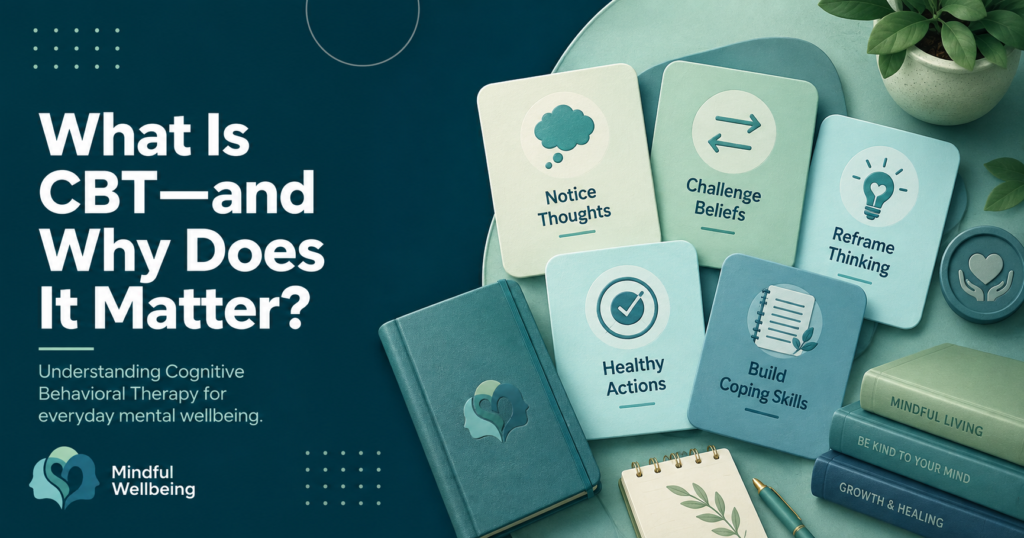
What Is CBT—and Why Does It Matter? CBT is a structured psychological therapy that explores the relationship between thoughts, emotions, and behaviors. An anxious student might think: “If I don’t get a high grade, I have failed.” A professional preparing for an important presentation might think: “If I make one mistake, everyone will think I’m incompetent.” These automatic predictions can increase anxiety and sometimes encourage avoidance. CBT helps people identify unhelpful thinking patterns, evaluate them more realistically, change behaviors that maintain anxiety, and gradually face situations they have been avoiding. The goal is not to eliminate normal anxiety. It is to prevent excessive anxiety from controlling everyday decisions and activities. https://my.clevelandclinic.org/health/treatments/21208-cognitive-behavioral-therapy-cbt Recent research continues to strengthen the evidence that Cognitive Behavioral Therapy (CBT) can help people manage anxiety by changing unhelpful patterns of thinking and behavior. This is especially relevant for adolescents, students, and working professionals, who may experience anxiety because of academic pressure, performance expectations, workplace demands, social concerns, uncertainty, or fear of failure. This matters because anxiety can affect concentration, confidence, sleep, productivity, decision-making, relationships, academic performance, and work performance. We’ll explain what recent research says about CBT for anxiety, what is happening now, what these findings mean for adolescents, students, and professionals, and what practical steps people can consider when seeking support. https://pubmed.ncbi.nlm.nih.gov/39799802/ What Does the Latest Research Tell Us? 1. CBT Continues to Show Benefits for Young People A 2025 analysis evaluated 86 randomized controlled trials involving 98 CBT interventions for anxiety in children and adolescents. Researchers also investigated why treatment outcomes can differ between young people—an important shift toward understanding which CBT approaches work best for whom. (Read the study on PubMed) 2. CBT May Produce Measurable Changes Beyond Symptoms Research highlighted by the National Institute of Mental Health (NIMH) found that children with anxiety showed significant symptom improvement after approximately three months of CBT. Researchers also observed changes in brain regions associated with cognitive control following treatment. (NIMH Research Update) This does not mean a brain scan is needed to determine whether CBT works. Instead, the research provides scientists with additional insight into how successful psychological treatment may relate to changes in brain functioning. 3. Digital CBT Is Becoming an Important Research Area For busy students and working professionals, accessibility matters. A 2025 randomized clinical trial involving 351 adults with generalized anxiety disorder found that smartphone-delivered digital CBT produced greater reductions in anxiety than an active psychoeducation comparison. For younger people, the evidence is more mixed. A 2025 systematic review found mobile CBT promising overall but noted that evidence specifically for anxiety remains less certain than for some other outcomes. (PubMed – Mobile CBT Review) That distinction is important: digital CBT can be promising without every app or online program being equally effective. 4. Researchers Are Exploring Earlier Intervention The 2026 Lancet Psychiatry study tested a pathway in schools where parents completed brief anxiety screening and eligible families were offered parent-led CBT with online and telephone professional support. This reflects an important direction in mental-health research—recognizing problematic anxiety earlier rather than waiting until it seriously disrupts everyday functioning. What Does This Mean for Adolescents and Students? Anxiety among young people may appear as: Fear of exams or failure Excessive overthinking Avoiding presentations or class participation Perfectionism Difficulty concentrating Fear of being judged Worry about the future Reduced confidence CBT can help students recognize thoughts such as: “I will definitely fail.” and learn to examine them more realistically: “This exam is important, but one result does not determine my entire future. I can prepare and focus on what I can control.” Recent evidence supports CBT as an important intervention for youth anxiety while also showing that treatment needs to be adapted to the individual rather than using exactly the same approach for everyone. https://www.betterhealth.vic.gov.au/health/conditionsandtreatments/cognitive-behaviour-therapy What Does This Mean for Working Professionals? Workplace anxiety may involve: Constant worry about performance Fear of making mistakes Difficulty switching off after work Avoiding difficult conversations Overchecking work Presentation anxiety Stress around deadlines Perfectionism or self-doubt CBT may help a professional recognize the difference between productive preparation and anxiety-driven thinking. For example: Anxiety-driven thought:“If this presentation isn’t perfect, my career will suffer.” More balanced thought:“I need to prepare carefully, but I don’t need to perform perfectly to do my job well.” Recent research into digital CBT may also be particularly relevant for working adults because flexible treatment formats could reduce some practical barriers to accessing psychological support. https://www.ncbi.nlm.nih.gov/books/NBK279297/ What Should You Do If Anxiety Is Affecting Daily Life? Research supports CBT, but this does not mean everyone experiencing stress automatically needs CBT. Consider seeking professional psychological support when anxiety is persistent, difficult to control, or regularly interfering with studies, work, sleep, relationships, confidence, or normal activities. A qualified psychologist can assess what is contributing to the anxiety and determine whether CBT or another evidence-based approach is appropriate. You can also start by noticing three things: Trigger → Thought → Response For example: Presentation → “I’ll embarrass myself” → Avoid presenting Recognizing this pattern is often useful because CBT works not only on how a person feels, but also on the thoughts and behaviors that can maintain anxiety. https://www.nhs.uk/mental-health/feelings-symptoms-behaviours/feelings-and-symptoms/anxiety-fear-panic/ The Key Takeaway: The important news is not that researchers have suddenly discovered CBT works. CBT already has a substantial evidence base. What is changing in 2025–2026 is our understanding of how CBT can be personalized, delivered digitally, introduced earlier, and made more accessible to people experiencing anxiety. For adolescents, this could mean better support for academic and social anxiety. For students, it may mean learning healthier responses to exams, performance pressure, perfectionism, and fear of failure. For working professionals, CBT may provide practical strategies for managing workplace worry, performance anxiety, and unhelpful thinking patterns. The strongest message from current research is simple: Anxiety should not be ignored when it begins controlling how you study, work, communicate, or live. Evidence-based psychological support can help. Call-to-Action: Is Anxiety Affecting Your Studies, Work or Confidence? If anxiety, overthinking, academic pressure,
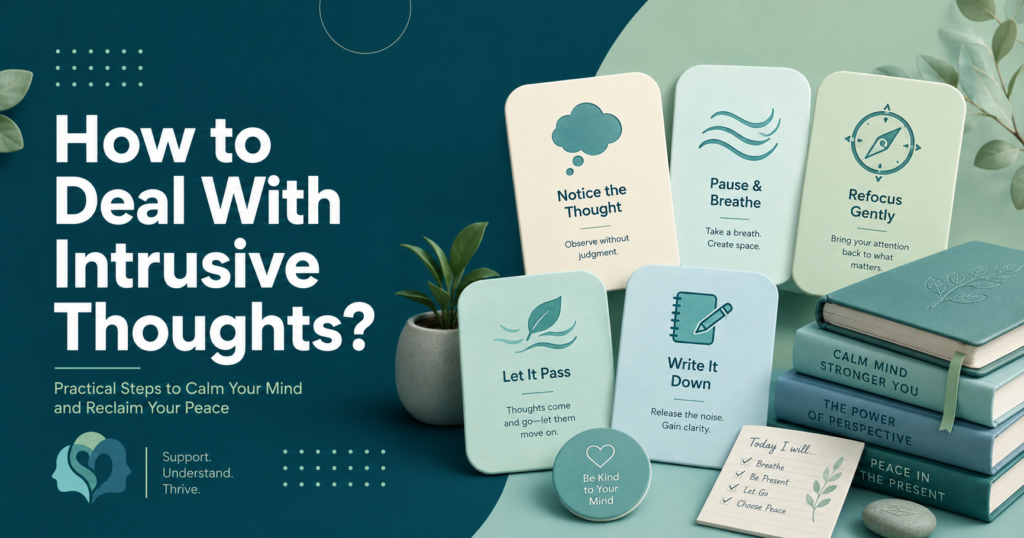
Intrusive thoughts can appear suddenly and feel upsetting, confusing, or difficult to ignore. They may involve unwanted ideas, doubts, mental images, fears, or urges that seem to enter your mind without invitation. Because they can feel uncomfortable or inconsistent with your values, you may start wondering why you had the thought or whether it says something important about you. However, experiencing an intrusive thought does not automatically mean you believe it, want it, or will act on it. Intrusive thoughts can occur in people without a mental-health disorder, although they can also form part of conditions such as obsessive-compulsive disorder (OCD). Learning how to deal with intrusive thoughts means changing how you respond to them rather than expecting your mind to never produce an unwanted thought again. In this article, you will learn what intrusive thoughts are, why understanding them matters, eight practical strategies for responding to them, and what recent 2026 research tells us about treatment. https://www.health.harvard.edu/mind-and-mood/managing-intrusive-thoughts What Are Intrusive Thoughts? Intrusive thoughts are unwanted thoughts, images, doubts, or urges that appear involuntarily. They can feel disturbing, embarrassing, frightening, irrational, or completely inconsistent with a person’s beliefs or personality. Having an intrusive thought is different from deliberately choosing to think about something. Intrusive thoughts can occur during periods of stress or anxiety, but they can also happen without an obvious trigger. They are especially associated with OCD when they become repetitive, distressing, and connected with compulsive behaviours or mental rituals. A 2026 article in Nature Mental Health describes intrusive thoughts in OCD as potentially becoming “sticky,” meaning that the person can feel compelled to react to them rather than simply allowing them to pass. The publication also highlights an important treatment gap in OCD, including shortages of appropriately trained specialists. https://www.nature.com/natmentalhealth/volumes/4/issues/4 Why Is Understanding Intrusive Thoughts Important? The thought itself is not always the main problem. The meaning a person attaches to it can increase distress. For example, someone might think: “Why am I thinking about this?” “What if this thought means something about me?” “Why can’t I completely stop it?” The person may then begin monitoring, analysing, checking, avoiding, or seeking reassurance. This can create a cycle: Intrusive thought → Anxiety → Overthinking → Checking or reassurance → Temporary relief → More attention to the thought Understanding this process can help you distinguish between having a thought and treating that thought as a fact, intention, prediction, or reflection of your character. Recent 2026 research continues to describe OCD as involving recurrent intrusive thoughts and compulsions performed in response to those thoughts. One contemporary paper reports lifetime OCD prevalence estimates ranging from approximately 1.3% to 2.5% based on recent meta-analyses. How to Deal With Intrusive Thoughts: 8 Practical Strategies 1. Recognize That a Thought Is Just a Thought When an unwanted thought appears, try noticing it instead of immediately interpreting it. You could simply tell yourself: “I’m noticing an intrusive thought.” This small change can help create psychological distance. Instead of thinking: “This thought must mean something.” Try: “My mind has produced an uncomfortable thought.” Remember that a mental event is not automatically a fact, prediction, or intention. 2. Avoid Trying to Force the Thought Away Many people instinctively think: “I need to stop thinking about this.” But repeatedly checking whether the thought has disappeared can keep your attention focused on it. Instead, acknowledge that the thought has appeared and gently return to what you were doing. The objective is not necessarily to eliminate every unwanted thought. It is to reduce how much importance and attention you give it. https://www.nature.com/articles/s44220-026-00643-3 3. Stop Repeatedly Analysing What the Thought Means Intrusive thoughts can lead to questions such as: “Why did I think this?” “What does it say about me?” “How can I be completely certain that it means nothing?” Searching repeatedly for an answer can turn into rumination. When you notice this happening, remind yourself: “I don’t have to solve every thought my mind creates.” Then gently redirect your attention toward what you were doing. 4. Reduce Reassurance-Seeking and Repeated Checking People sometimes respond to intrusive thoughts by: Constantly asking others whether everything is okay Repeatedly searching online for reassurance Reviewing situations again and again in their mind Checking things multiple times Trying to achieve complete certainty These behaviours may provide temporary relief, but they can sometimes strengthen the cycle of anxiety. In OCD, these repetitive responses may function as compulsions. Reducing compulsive reactions is therefore a major component of evidence-based treatment. https://www.parmleycounseling.com/blog/overthinking-reassurance-checking-ocd 5. Use Grounding to Return to the Present If your attention becomes completely caught up in an intrusive thought, gently reconnect with your surroundings. Notice: Five things you can see Sounds you can hear The feeling of your feet against the floor Your natural breathing The activity you were doing before the thought appeared Grounding is not about proving that the thought is false. It simply helps redirect your attention to the present moment. Avoid turning grounding into something you feel you must perform perfectly every time a thought appears. 6. Identify Stress and Lifestyle Patterns Stress, exhaustion, and disrupted sleep can make difficult thoughts feel harder to manage. Try keeping a short record: Situation → Stress level → Intrusive thought appeared → My response Do not write down every unwanted thought in detail. Instead, look for broader patterns. For example, you may notice intrusive thoughts become more difficult to ignore during examination periods, demanding workdays, relationship stress, or periods of poor sleep. Regular sleep, physical activity, relaxation, social connection, and balanced routines support overall emotional wellbeing, although they are not substitutes for professional treatment when symptoms become significant. https://www.helpguide.org/mental-health/stress/stress-management 7. Continue With Your Normal Activities Intrusive thoughts can sometimes encourage avoidance. Someone may begin avoiding places, situations, activities, or responsibilities because they fear another unwanted thought will appear. When the activity itself is safe, try not to allow the presence of an uncomfortable thought to automatically determine what you do. You could remind yourself: “This thought can be
How to Deal With Intrusive Thoughts: 8 Practical Strategies Read More »
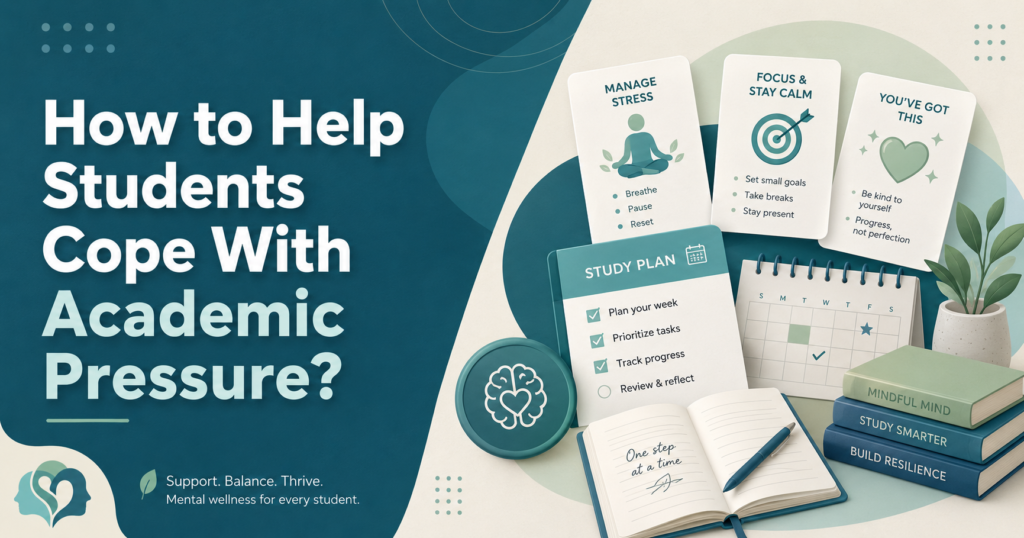
How to Help Students Cope With Academic Pressure Academic pressure is the emotional and mental strain students experience when they believe they must meet demanding educational expectations. It may arise from examinations, assignments, grades, competition, university admission requirements or pressure from parents, teachers and the students themselves. Some academic pressure is normal. It may encourage a student to revise for an examination, complete an assignment or improve a particular skill. However, it becomes unhealthy when students feel constantly worried, exhausted or afraid of failure. Academic pressure can be caused by: A heavy workload or several deadlines High expectations from adults Fear of receiving low marks Competition and comparison with classmates Perfectionism and unrealistic personal goals Difficulty understanding particular subjects Pressure about university admission or future careers Lack of sleep, exercise or relaxation https://www.statista.com/topics/4553/college-student-health-in-the-us/ Stress is usually a response to an external challenge, such as an examination or deadline. It can sometimes provide motivation, but it may also cause sleep problems and other difficulties when it becomes excessive. Recognizing academic pressure matters because stress can affect how students think, feel and behave. Common effects include constant worry, forgetfulness, irritability, difficulty concentrating, feeling overwhelmed and changes in sleeping or eating patterns. OECD research has also found that students who report greater fear of failure often report lower satisfaction with life. This means that high academic performance does not always protect students from emotional distress. https://www.sciencedirect.com/science/article/pii/S0165032723008510 How to Help Students Cope With Academic Pressure 1. Listen Before Offering Solutions The first step is to give the student an opportunity to explain what is causing the pressure. Adults sometimes respond too quickly by saying, “Do not worry,” “Just study harder” or “Everyone feels stressed.” Although these statements may be well-intentioned, they can make students feel that their concerns are not being taken seriously. Begin with calm and open questions: “Which part of school feels most difficult right now?” “What are you most worried might happen?” “Is the pressure coming from the workload, examinations or expectations?” “What support would make this week more manageable?” Listen without interrupting, criticizing or immediately comparing the student with someone else. Once the main cause has been identified, it becomes easier to choose an appropriate solution. Teachers can support stressed students by providing emotional support, encouraging positive peer relationships and connecting students with other sources of assistance. https://dpi.cultechpub.com/index.php/dpi/article/view/12 2. Create a Realistic Study Schedule A clear study schedule can help students feel more in control. However, a timetable should be realistic rather than filling every available hour with schoolwork. Start by writing down: Examination dates Assignment deadlines Topics that require revision Subjects in which the student needs additional help Available study periods Next, divide the workload across the week. Difficult subjects can be scheduled when the student is usually most alert. For example, instead of writing “Study science,” use a specific instruction such as: Review Chapter 4 for 30 minutes Practise five questions Check incorrect answers Summarize the main concepts Include time for meals, sleep, exercise, family activities and relaxation. A good schedule should guide students without making them feel controlled by it. 3. Break Large Tasks Into Smaller Steps A large project or final examination can seem impossible when students view it as one enormous task. Breaking it into smaller actions makes the work easier to begin and complete. For example, “Complete the English project” can be divided into: Select the topic. Find three reliable sources. Prepare an outline. Write the introduction. Complete one section each day. Add images or examples. Proofread the work. Submit it before the deadline. Students can cross out each completed step. This creates a visible sense of progress and reduces the temptation to delay the task. Parents and teachers should recognize planning, effort and improvement instead of praising only the final grade. https://futurity-social.com/index.php/journal/article/view/191 4. Teach Effective Study Methods Studying for many hours does not always lead to better learning. Passive rereading can make students feel familiar with the material without ensuring that they can remember or apply it. Encourage students to use active learning methods such as: Answering practice questions Explaining a topic in their own words Teaching a concept to someone else Creating flashcards for key terms Drawing diagrams and mind maps Writing short summaries without looking at the book Completing timed sample papers Reviewing and correcting mistakes For example, after studying a science chapter, the student can close the book and write down everything they remember. They can then compare their answer with the chapter and identify information that needs further revision. 5. Encourage Regular and Restorative Breaks Students cannot maintain full concentration for unlimited periods. Planned breaks can prevent frustration and help them return to their work with better attention. One possible routine is: Study for 30–40 minutes Take a 5–10-minute break Complete another focused study period Take a longer break after several sessions During short breaks, students can stretch, drink water, walk around, look outside or practise slow breathing. Scrolling through stressful social-media content or continuously checking school messages may not provide genuine rest. The purpose of a break is to give the mind and body a chance to recover. The length of each study session can be adjusted according to the student’s age, learning needs and ability to concentrate. 6. Protect Sleep and Healthy Daily Routines Students sometimes stay awake late because they believe that every additional hour of revision will improve their results. However, repeated loss of sleep may make it more difficult to concentrate, manage emotions and remember what they have learned. Help students establish a regular routine by: Setting a consistent bedtime Finishing demanding schoolwork earlier when possible Reducing screen use before sleep Preparing books, uniforms and school bags in advance Avoiding last-minute revision throughout the night Keeping the sleeping environment calm and comfortable Regular meals, hydration and physical activity should also be included in the student’s routine. Rest is not a reward that students receive only after completing everything. It is an important part of effective learning and
Student and Academic Pressure Read More »
How to Cope with the Impact of Anxiety Anxiety is the body and mind’s response to perceived danger, pressure, uncertainty, or stress. It can activate physical and psychological changes that prepare a person to respond to a possible threat. For example, someone may experience anxiety before: An examination A job interview A public presentation An important meeting A medical appointment A difficult conversation A major life change In these situations, mild anxiety may increase alertness and encourage preparation. The feeling usually reduces after the event has passed. https://www.healthyplace.com/anxiety-panic/articles/anxiety-disorders-research-at-national-institute-of-mental-health Occasional anxiety versus an anxiety disorder: Occasional anxiety is usually: Connected to a specific situation Temporary Proportionate to the challenge Manageable without major disruption Reduced when the stressful event ends Anxiety may require greater attention when it: Continues even when no immediate danger is present Feels excessive compared with the situation Becomes difficult to control Causes frequent emotional or physical distress Leads to avoidance Disrupts school, work, sleep, relationships, or daily responsibilities The National Institute of Mental Health explains that anxiety disorders involve more than occasional worry or fear. The anxiety may not disappear, may occur across several situations, and can become worse over time. Why does anxiety matter? Anxiety matters because it can affect several areas of life simultaneously. Concentration and memory Sleep and energy Academic and workplace performance Confidence and decision-making Physical comfort Relationships and social participation Overall quality of life https://www.researchgate.net/publication/399596670_Global_burden_of_anxiety_disorders_in_adolescents_and_young_adults_aged_10-24_years_from_1990_to_2021 Common Effects of Anxiety Anxiety does not affect everyone in the same way. Its effects may be emotional, mental, physical, behavioural, academic, social, or professional. Emotional and mental effects Common emotional and cognitive effects may include: Excessive or persistent worrying Irritability Difficulty concentrating Fear of making mistakes Restlessness Negative or repetitive thinking Difficulty tolerating uncertainty Feeling overwhelmed Expecting the worst outcome Difficulty making decisions A person may also repeatedly review past conversations, worry about future events, or interpret minor problems as signs of a larger disaster. Physical effects Anxiety can activate the body’s stress response. Possible physical effects include: Muscle tension Rapid heartbeat Headaches Stomach discomfort Nausea Sweating Trembling Tiredness Difficulty sleeping Feeling restless or unable to relax The WHO identifies symptoms such as tension, sleep difficulties, nausea, abdominal discomfort, heart palpitations, sweating, trembling, and problems concentrating or making decisions among the possible features of anxiety disorders. Behavioural effects Behavioural signs may include: Avoiding responsibilities Withdrawing from friends or family Procrastinating Repeatedly checking work Seeking constant reassurance Leaving stressful situations early Refusing unfamiliar activities Spending excessive time researching possible risks Finding it difficult to begin or complete tasks https://www.statista.com/statistics/827374/clinician-chosen-top-mental-health-concerns-for-college-students/?srsltid=AfmBOophrze3KctV8ZEn_jO05WR2ecCJ2itJK6BCPwHkcL1l2HT_hyxC How to Cope with the Impact of Anxiety Coping with anxiety is not about forcing every anxious thought to disappear. It involves learning how to respond to anxiety in ways that support daily functioning, emotional regulation, and long-term well-being. https://www.mayoclinichealthsystem.org/hometown-health/speaking-of-health/11-tips-for-coping-with-an-anxiety-disorder Step 1: Identify your anxiety triggers Begin by noticing the situations, thoughts, environments, responsibilities, or physical sensations that usually increase your anxiety. Keep a brief journal containing: What happened What you thought How your body reacted What emotion you experienced What you did in response Whether your response helped in the long term For example: “I received an email asking for a meeting. I immediately thought I had made a serious mistake. My heartbeat increased, and I reread the email repeatedly.” This record may help you recognise patterns between triggers, thoughts, physical sensations, and behaviour. Step 2: Name what you are feeling Instead of saying, “Something is wrong,” describe the experience more accurately: “I am feeling anxious because I do not know what will happen.” You can also separate feelings from facts: “I feel as though I will fail, but that feeling does not prove that failure is certain.” Naming the emotion can make it feel clearer and more manageable. Step 3: Practise slow breathing Anxiety may cause breathing to become fast or shallow. Gently slowing the breath can help the body settle. Try the following: Sit in a comfortable position. Relax your shoulders as much as possible. Breathe in gently through your nose. Exhale slowly without forcing the breath. Continue at a comfortable pace for one or two minutes. Avoid repeatedly taking extremely deep or forceful breaths, as this may cause light-headedness. The aim is to breathe comfortably and gradually, not to force anxiety to disappear. Step 4: Use grounding techniques Grounding brings attention back to the present environment. A simple sensory exercise is to identify: Five things you can see Four things you can physically feel Three things you can hear Two things you can smell One thing you can taste Another option is to place both feet on the floor and describe your surroundings using neutral facts: “I am sitting in a room. The chair is supporting me. I can hear a fan. I can see a window.” Grounding may interrupt repetitive thinking and help you reconnect with the present moment. Step 5: Break tasks into smaller steps Anxiety can make responsibilities appear larger and more difficult than they are. Instead of writing: “Complete the whole project.” Break the responsibility into smaller actions: Open the document. Read the instructions. Write the first heading. Work for 15 minutes. Take a planned break. Continue with the next section. Completing one manageable step creates progress and may reduce the urge to avoid the task. Step 6: Challenge unhelpful thoughts Anxiety often involves treating the worst possible outcome as though it is certain. Ask yourself: What evidence supports this thought? What evidence does not support it? Am I confusing a possibility with a certainty? Am I assuming I know what another person thinks? Am I expecting perfection? What would I say to a friend in the same situation? What is a more balanced explanation? For example: Unhelpful thought: “I will fail completely.” Balanced thought: “This may be challenging, but I can prepare, ask for help, and focus on one step at a time.” Balanced thinking does not mean pretending that difficulties do not exist. It means considering the complete situation rather than focusing only on the worst possibility. Step
Copying With Anxiety Read More »
How to Stop Overthinking and Calm Your Mind Overthinking happens when the mind repeatedly examines a problem, conversation, decision, or possible future event without reaching a useful solution. In psychology, this pattern is often described as rumination, worry, or repetitive negative thinking. Research connects repetitive negative thinking with difficulties in concentration, problem-solving, anxiety, and depression. https://pmc.ncbi.nlm.nih.gov/articles/PMC12801832/ What Is Overthinking? Overthinking is not simply thinking carefully. Careful thinking usually helps a person understand a situation, make a decision, or take action. Overthinking keeps the person mentally stuck. It may involve: Replaying an awkward conversation repeatedly Worrying about events that have not happened Imagining the worst possible outcome Constantly questioning a decision Trying to make everything perfect Thinking about mistakes without learning from them Seeking reassurance again and again For example, a student may think, “I did not answer one question properly, so I might fail the examination.” The thought may then grow into worries about disappointing parents, losing confidence, or being unsuccessful in the future. This thought pattern does not solve the original problem. Instead, it increases emotional pressure. https://mentalhealthcenterkids.com/blogs/articles/teen-mental-health Why Is It Important to Stop Overthinking? Overthinking can affect an adolescent’s emotions, behaviour, learning, relationships, and daily routine. Persistent worry may make it harder to concentrate in class, complete assignments, make decisions, relax after school, or fall asleep. Research defines rumination as repeatedly and passively dwelling on negative feelings and their possible causes and consequences.A 2025 report highlighted by the American Psychological Association found that only 58.5% of US teenagers said they usually or always received the social and emotional support they needed. Recognising overthinking early can help adolescents replace unproductive thought loops with problem-solving, emotional regulation, and appropriate support. Common Signs of Overthinking in Adolescents Overthinking may look different from one adolescent to another. Some become quiet and withdrawn, while others become irritable, restless, or dependent on reassurance. Common signs include: Difficulty making even small decisions Repeatedly asking, “What if something goes wrong?” Struggling to concentrate on studies Replaying social interactions Fear of making mistakes Comparing oneself constantly with others Feeling mentally tired despite limited physical activity Difficulty relaxing before bedtime Avoiding tasks because the result may not be perfect Experiencing headaches, tension, or an unsettled stomach during stress Occasional worry is a normal part of life. It becomes a concern when it regularly interferes with school, sleep, relationships, confidence, or daily functioning. https://clearbehavioralhealth.com/overthinking-overcoming-teen-anxiety-treatment/ Four Ways to Stop Overthinking and Calm Your Mind 1. Name the Thought Instead of Believing It A thought is not automatically a fact. When adolescents are anxious, their minds may present predictions as if they are certain. Instead of saying: “Everyone will laugh at me during my presentation.” Try: “I am having the thought that everyone will laugh at me.” This small change creates psychological distance between the person and the thought. Next, ask: What facts support this thought? What facts do not support it? Am I predicting the future? What is a more balanced explanation? A balanced replacement might be: “I may feel nervous, but I have prepared. Most students will be concentrating on their own presentations.” The goal is not forced positive thinking. It is accurate and balanced thinking. https://www.theemotionmachine.com/why-you-should-give-your-negative-inner-voice-a-name/ 2. Use the “Write, Sort and Act” Method Thoughts often feel more confusing when they remain inside the mind. Writing them down makes them easier to organise. Create three columns: My worry Can I control it? My next step I might perform poorly in the test. Partly Review one chapter and ask my teacher about difficult questions. Other students may judge me. No Focus on my preparation and speak to a trusted friend. I have too much homework. Partly List tasks and begin with the shortest one. When a situation is controllable, choose one small action. When it is not controllable, practise redirecting attention toward something useful in the present. This approach turns vague worry into practical problem-solving. 3. Calm the Body to Calm the Mind Overthinking is not only a thinking problem. Stress can also appear in the body through muscle tension, restlessness, faster breathing, or physical discomfort. Try this simple breathing exercise: Sit comfortably and relax your shoulders. Breathe in gently for four counts. Breathe out slowly for six counts. Repeat for one or two minutes without forcing the breath. Bring your attention back whenever the mind wanders. A longer, comfortable exhalation can help the body move toward a calmer state. Other grounding activities include: Taking a short walk Stretching tense muscles Drinking water slowly Listening to calming audio Naming five things you can see and four things you can feel Completing one simple physical task, such as arranging a desk https://psyche.co/guides/how-to-stop-overthinking-with-help-from-metacognitive-strategies These actions do not remove every problem, but they can reduce emotional intensity so the person can think more clearly. 4. Set a Worry Period and Redirect Your Attention Trying to command the mind to “stop thinking” can make a thought feel even more important. A more useful strategy is to postpone the worry deliberately. Choose a daily 10–15-minute “worry period.” When an anxious thought appears, write it down and say: “I will think about this during my scheduled worry time.” Then return to the current activity. During the worry period: Read the worries you recorded Identify which ones still matter Choose an action for controllable problems Let go of worries that are no longer relevant Discuss serious concerns with a trusted adult After the period ends, move to another planned activity. This teaches the mind that worry does not have to control the entire day. Healthy Daily Habits That Support a Calm Mind The four strategies become more effective when they are supported by a healthy routine. Adolescents can protect their mental well-being by maintaining regular sleep and wake times, taking breaks during study, staying physically active, spending time with supportive people, and reducing stimulating screen use before bedtime. Social media boundaries may be particularly helpful for adolescents who repeatedly compare themselves with others or replay online interactions. A practical
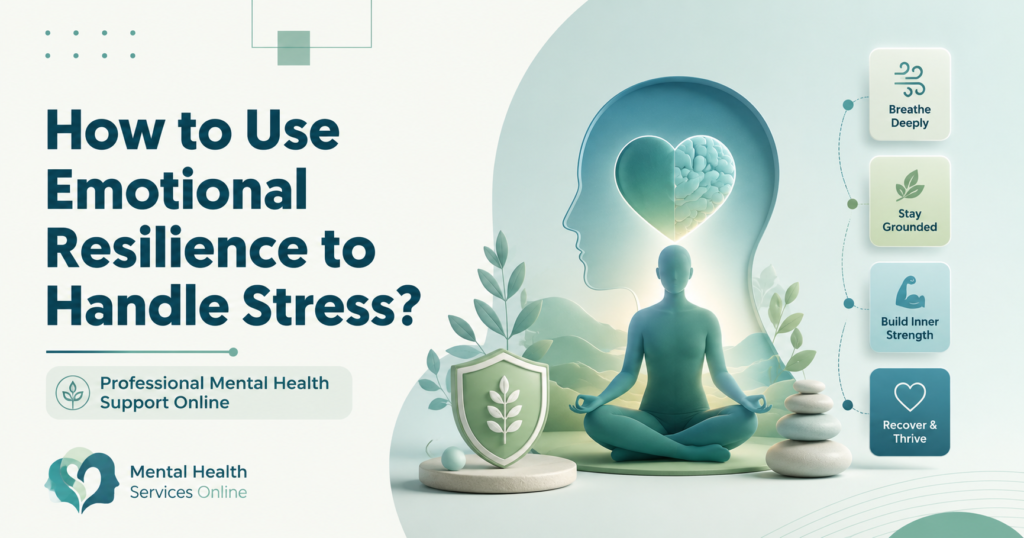
How to Use Emotional Resilience to Handle Stress Stress can affect people at every stage of life. Students may experience examination pressure, heavy workloads and fear of failure. Adolescents may face academic expectations, friendship difficulties, family changes and concerns about their future. Adults often manage work responsibilities, finances, relationships, parenting and personal challenges. Emotional resilience is the ability to manage difficult emotions, adjust to stressful situations and recover after disappointment, failure, conflict or change. It is not a personality trait that only some people possess. It is a collection of thoughts, behaviours and coping skills that can be developed through regular practice. Developing emotional resilience is important because it helps students, adolescents and adults understand difficult emotions, adjust to change, recover from setbacks and make healthier decisions under pressure. In this post, we will explore seven practical ways to use emotional resilience to handle stress. These examples show how emotional awareness, balanced thinking, supportive relationships, healthy routines and problem-solving can reduce the impact of stress in school, family, social and everyday life. https://www.frontiersin.org/journals/psychiatry/articles/10.3389/fpsyt.2025.1536553/full Why Is Emotional Resilience Important for Handling Stress? Emotional resilience is particularly important for students and adolescents because their emotional, social and academic lives are developing rapidly. According to the World Health Organization, approximately one in seven adolescents aged 10–19 experiences a mental health condition. Anxiety, depression and behavioural difficulties are among the leading causes of illness and disability among young people. For students, unmanaged stress can affect concentration, memory, attendance, examination performance and motivation. For adolescents, it may influence confidence, friendships, family communication and decision-making. For adults, continuing stress can affect work performance, finances, physical health, relationships and personal happiness. WHO also reports that depression and anxiety lead to approximately 12 billion lost working days every year, costing the global economy around US$1 trillion in lost productivity. This demonstrates that the effects of stress extend beyond individuals and can influence families, schools, workplaces and communities. https://www.who.int/news/item/02-09-2025-over-a-billion-people-living-with-mental-health-conditions-services-require-urgent-scale-up Building emotional resilience can help people: Respond calmly to pressure Recover from academic or personal setbacks Communicate emotions more effectively Make thoughtful decisions Maintain healthier relationships Ask for support when necessary Emotional resilience does not remove every stressful experience. Instead, it provides students, adolescents and adults with healthier ways to face challenges. https://www.who.int/news-room/fact-sheets/detail/adolescent-mental-health 7 Ways Students, Adolescents and Adults Can Build Resilience 1. Identify and Name Your Emotions The first step in emotional resilience is recognising what you are feeling. People commonly say, “I am stressed,” even though several emotions may be present underneath that stress. These emotions may include: Anxiety about an examination Disappointment after receiving a low grade Frustration during a family disagreement Embarrassment after making a mistake Worry about money or responsibilities Loneliness after a friendship problem Naming the exact emotion creates a pause between the feeling and the reaction. Instead of saying, “Everything is terrible,” try saying: “I feel anxious because I am not fully prepared.” “I feel disappointed because the result was lower than I expected.” “I feel overwhelmed because I have too many tasks.” “I feel hurt because I was excluded by my friends.” https://www.cdc.gov/emotional-well-being/managing-difficult-emotions/index.html?utm_source=chatgpt.com 2. Pause Before Reacting Stress can lead to impulsive reactions. A person may argue, send an angry message, avoid an important responsibility or make a decision without considering the consequences. The STOP technique can help: S — Stop: Do not react immediately.T — Take a breath: Breathe slowly and relax your body.O — Observe: Notice your thoughts, feelings and physical reactions.P — Proceed: Choose the most helpful response. The CDC recommends stress-management practices such as slow breathing, stretching, meditation, journaling and taking time to unwind. For example, an adolescent who receives a hurtful message can put the phone down before replying. A student who becomes anxious during an examination can pause, breathe and begin with the easiest question. An adult who receives criticism can listen carefully before answering defensively. The pause may last only a few seconds, but it can prevent stress from controlling behaviour. https://www.policyjssr.com/index.php/PJSSR/article/view/838 6. Develop a Healthy Recovery Routine The mind and body need regular opportunities to recover from pressure. Without enough rest, even small problems can feel overwhelming. A healthy recovery routine may include: Following a regular sleep schedule Eating regular and balanced meals Taking short study or work breaks Participating in suitable physical activity Spending time outdoors Limiting unnecessary screen time Journaling Practising breathing exercises Enjoying hobbies Spending time with supportive people Routine for students After every 30–45 minutes of focused study, students can take a brief break, stretch, drink water and return to their work with improved concentration. Routine for adolescents Adolescents can set limits on late-night social media use, especially before examinations or school days. Better sleep can support attention, emotional regulation and decision-making. Routine for adults Adults can create boundaries between work and personal time by avoiding unnecessary work messages during meals, family activities or bedtime. Recovery is not laziness. It allows people to think more clearly and respond more calmly. 3. Challenge Unhelpful Thoughts Stress often becomes stronger because of the way a situation is interpreted. Common unhelpful thoughts include: “I always fail.” “Nobody understands me.” “Everyone will judge me.” “I cannot manage this.” “One mistake has ruined everything.” “Things will never improve.” Emotional resilience involves checking whether these thoughts are completely accurate. Ask yourself: What evidence supports this thought? What evidence does not support it? Am I imagining the worst possible outcome? Is this problem temporary or permanent? What would I say to a friend in the same situation? Replace extreme thoughts with more balanced statements. Instead of: “I failed one test, so I will fail the whole subject.” Try: “This result was disappointing, but I can identify where I lost marks and improve.” Instead of: “Everyone will laugh at me during
How to Use Emotional Resilience to Handle Stress Read More »
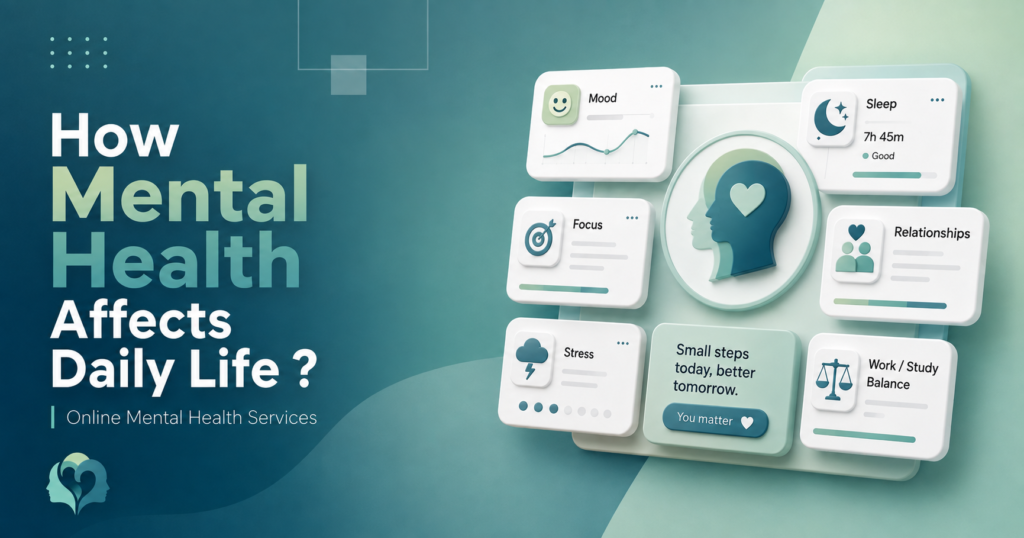
How Mental Health Affects Daily Life ? Mental health is not just about mental illness—it is about how we think, feel, and handle everyday life. From waking up in the morning to interacting with friends, studying, or working, our mental well-being quietly influences almost everything we do. When mental health is strong, people tend to feel more focused, balanced, and motivated. But when it is struggling, even simple tasks like getting out of bed, concentrating in class, or communicating with others can feel overwhelming. Understanding how mental health affects daily life is important because it helps us recognize early signs of stress, anxiety, or emotional imbalance and take action before things become more serious. https://www.statista.com/topics/8066/mental-health-worldwide/ What Is Mental Health, and Why Does It Matter? Mental health is a person’s emotional, psychological, and social wellbeing. It affects how we think, feel, cope with stress, make choices, and interact with others in daily life. Good mental health does not mean feeling happy all the time. It means being able to handle challenges, manage emotions, and continue with daily responsibilities in a healthy way. Mental health matters because it influences almost every part of life. It affects learning, work, relationships, sleep, focus, and physical health. When mental health is strong, people are usually more confident, productive, and resilient. When it is weak, even simple tasks can feel difficult, and stress may build up quickly. Understanding mental health helps readers notice problems early, support others with care, and take practical steps to improve wellbeing. It is an important part of living a balanced, healthy, and fulfilling life. https://agsjournals.onlinelibrary.wiley.com/doi/abs/10.1111/jgs.16423 How Mental Health Affects Daily Life Mental health influences the way people think, feel, and behave every day. It affects relationships, school or work performance, decision-making, physical health, and the ability to handle stress. When mental health is balanced, people are usually able to cope with challenges, communicate effectively, and enjoy daily activities. However, poor mental health can make even simple tasks feel difficult and overwhelming. Emotional Well-Being Mental health strongly impacts emotions and mood. A person with good mental health is more likely to feel calm, confident, and emotionally stable. On the other hand, stress, anxiety, or depression may cause feelings of sadness, anger, frustration, or fear. For example, someone experiencing anxiety may constantly worry about small situations, while a person dealing with depression may lose interest in hobbies or activities they once enjoyed. These emotional struggles can affect motivation and overall happiness. https://onlinelibrary.wiley.com/doi/abs/10.1046/j.1365-2214.2003.00341.x Relationships With Others Mental health also plays a major role in how people interact with family, friends, classmates, and coworkers. Positive mental health helps people communicate clearly, show empathy, and build healthy relationships. When mental health problems are ignored, people may become withdrawn, irritated, or overly sensitive. Misunderstandings and conflicts may increase because emotions become harder to manage. Strong social support and open communication can improve both mental and emotional well-being. Performance at School or Work A healthy mind improves concentration, memory, creativity, and productivity. Students with good mental health often find it easier to focus during lessons, complete assignments, and participate confidently in class. Poor mental health can reduce energy and attention, making it difficult to learn or complete tasks. Stress and emotional exhaustion may lead to lower performance, missed deadlines, or lack of motivation. Taking breaks, managing time wisely, and seeking support when needed can help improve performance. Physical Health and Energy Levels Mental health and physical health are closely connected. Emotional stress can affect sleep, appetite, energy levels, and even the immune system. People struggling with mental health issues may experience headaches, fatigue, body pain, or changes in eating habits. For instance, constant stress may lead to poor sleep, while lack of sleep can increase feelings of anxiety and irritability. Regular exercise, balanced nutrition, and proper rest can support both mental and physical health. https://link.springer.com/article/10.2165/00007256-200029030-00003 Decision-Making and Daily Activities Mental health affects how people think and make decisions. When someone feels mentally well, they are more likely to solve problems calmly and make thoughtful choices. Poor mental health can make decision-making harder. Simple responsibilities such as studying, completing chores, attending meetings, or managing personal hygiene may begin to feel overwhelming. Building healthy routines and asking for help can make daily life more manageable. Effective Strategies to Improve Mental Health Improving mental health takes time, consistency, and small daily efforts. While there is no single solution that works for everyone, building healthy habits can make a meaningful difference in mood, energy, focus, and overall wellbeing. Here are some effective strategies that can help. 1. Maintain a Healthy Daily Routine A steady routine gives your day structure and reduces stress. Try to wake up, eat, study, work, and sleep around the same time each day. Predictable habits can make life feel more organized and manageable. 2. Get Enough Sleep Sleep is essential for mental wellbeing. Poor sleep can increase irritability, stress, and difficulty focusing. Aim for a regular sleep schedule and create a calm bedtime routine. 3. Stay Physically Active Exercise supports both the body and the mind. Even simple activities like walking, stretching, cycling, or dancing can help reduce stress and improve mood. 4. Eat Balanced Meals Food affects how you feel and think. A healthy diet with enough water, fruits, vegetables, protein, and whole grains can support better energy and emotional balance. 5. Limit Stress Triggers Try to notice what increases your stress, such as overworking, too much screen time, or constant negative content. Reducing these triggers can help protect your mental health. 6. Practice Mindfulness and Relaxation Deep breathing, meditation, prayer, or quiet reflection can help calm the mind. These practices are useful for reducing anxiety and staying present in the moment. 7. Stay Connected with Supportive People Talking to trusted friends, family members, or mentors can ease emotional pressure. Supportive relationships help people feel understood and less alone. 8. Take Breaks from
How Mental Health Affects Daily Life ? Read More »