Student Therapy Online

How to Minimize the Impact of Stress on Memory

Stress is a normal part of life, but when it becomes frequent or intense, it can interfere with how the brain learns, stores, and retrieves information. Research shows that brief acute stress can sometimes sharpen alertness and emotional memory, while chronic stress is more likely to disrupt working memory, new learning, and recall by affecting brain systems such as the hippocampus, prefrontal cortex, and amygdala. 

Stress can affect memory at any age, making it harder to focus, learn, and remember important information. For students, adolescents, and adults, pressure from exams, schoolwork, family responsibilities, and daily life can all build up and interfere with brain function. Over time, the impact of stress on memory can show up as forgetfulness, trouble concentrating, and mental fatigue. 

Short-term memory, often called working memory, helps you hold and use information for a few seconds or minutes, such as remembering instructions, solving a math problem, or following a conversation. Recent reviews show that stress can disrupt working memory by making it harder to focus, organize information, and keep track of what you are doing, especially during high-pressure situations like exams, deadlines, or conflict. When stress is mild and temporary, the effect may be small, but when stress becomes intense or prolonged, it can interfere more strongly with the brain systems involved in attention and executive control. Recent evidence links chronic stress with broader difficulties in cognition, including flexibility and inhibition, which can make working memory even less efficient. 

https://www.tandfonline.com/doi/abs/10.1080/09658210500139176

Long-term memory is used to store information for later recall, such as facts, experiences, and skills. Updated research shows that stress can affect long-term memory in different ways depending on timing and intensity: acute stress may sometimes make emotionally important events feel more memorable, but chronic stress is more likely to weaken learning, consolidation, and later recall. A major reason is that stress hormones such as cortisol can influence brain regions involved in memory, especially the hippocampus and amygdala. Recent reviews report that stress-related cortisol changes can alter how memories are encoded and retrieved, and long-lasting stress may contribute to poorer long-term memory performance over time.

https://www.statista.com/topics/6735/stress-in-the-uk/

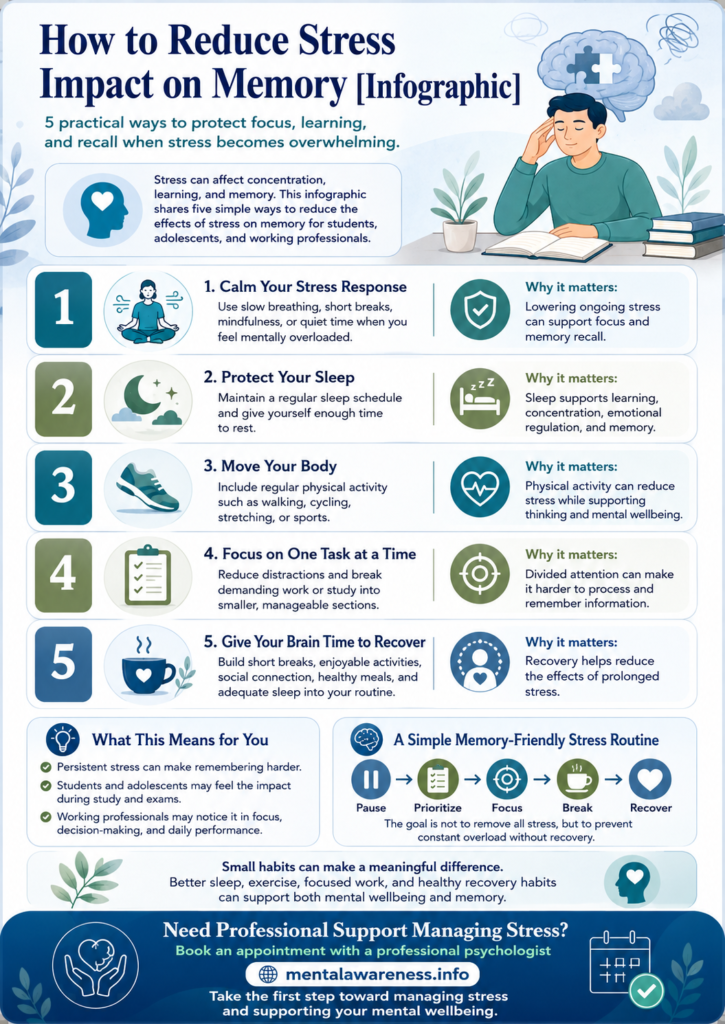
Recent reviews show that stress can make it harder to concentrate, hold information in working memory, and recall what you learned, especially when stress becomes chronic or keeps repeating. Researchers in 2024 and 2025 also note that the effect is not identical in every situation: some very short-term tasks may be affected differently than long-term memory, which is why the best approach is not to “avoid all stress,” but to manage it in ways that protect attention, sleep, and recovery.

1) Understand How Stress Affects Memory

Stress can overload the brain systems that help with focus, planning, and memory control. A 2024 review found that chronic stress is linked with weaker working memory and poorer academic performance, while other recent work shows that stress can affect cognitive flexibility and inhibitory control too. In simple terms, stress can make it harder to stay organized, remember instructions, and retrieve information when you need it.

2) Protect Your Sleep

Sleep is one of the strongest tools for memory protection. A 2025 review reported that sleep and sleep loss affect attention, memory, executive function, and emotional regulation, and older research continues to show that sleep helps the brain process and stabilize newly learned information. For students, adolescents, and adults, getting regular, good-quality sleep is one of the most reliable ways to reduce the memory problems that stress can worsen.

https://journals.physiology.org/doi/full/10.1152/physrev.00032.2012?rfr_dat=cr_pub&

3) Use Exercise as a Brain Reset

Physical activity is not only good for the body; it also supports memory and thinking. A 2025 umbrella review found strong evidence that exercise, even at light intensity, benefits general cognition, memory, and executive function across populations. That makes movement a practical stress-management habit for anyone who studies, works, or spends long hours mentally overloaded.

4) Practice Mindfulness or Breathing Exercises

Mindfulness-based practices can help reduce stress and support sleep quality, which matters because better sleep often means better memory. The U.S. National Center for Complementary and Integrative Health reports that mindfulness meditation may improve sleep quality and can reduce symptoms of anxiety and distress in some people, although results vary and it should not replace medical care. Recent reviews also suggest mindfulness can support emotional regulation and stress resilience.

https://link.springer.com/article/10.3758/s13421-019-00947-z

5) Study or Work in Smaller Chunks

Stress often hurts the brain’s ability to hold and organize information in the moment, so shorter, focused study or work sessions are usually easier to remember than long, overloaded sessions. Breaking tasks into smaller parts, using checklists, and reviewing information more than once can reduce the strain on working memory and make recall easier later. This approach fits what recent stress-and-working-memory research shows about how stress interferes with the brain’s control systems.

6) Don’t Ignore Persistent Stress

If stress is constant, memory problems can become more noticeable over time. A recent review notes that chronic stress can affect several thinking skills, not just memory alone, so it is important to take repeated forgetfulness seriously when it starts affecting school, home, or daily routines. If memory changes continue, professional support is appropriate rather than trying to push through alone.

https://www.statista.com/statistics/315715/ways-that-us-adults-manage-stress/

Conclusion

The latest research points to a simple message: stress and memory are closely linked, but memory can be protected. Sleep well, move regularly, use mindfulness or breathing techniques, and break demanding tasks into manageable steps. These habits help reduce the effect of stress on working memory, learning, and recall, especially for students and other people who face daily mental pressure.

Take the Next Step

If stress is affecting your memory, the good news is that small, consistent changes can make a real difference. To learn more practical strategies and get expert guidance tailored to your needs, download our free resource on stress and memory or book a consultation with our team today. Take the first step toward better focus, stronger recall, and a calmer mind by visiting our guide or scheduling your consultation now.

Book your free consultation today: https://mentalawareness.info

Leave a Comment

Your email address will not be published. Required fields are marked *