
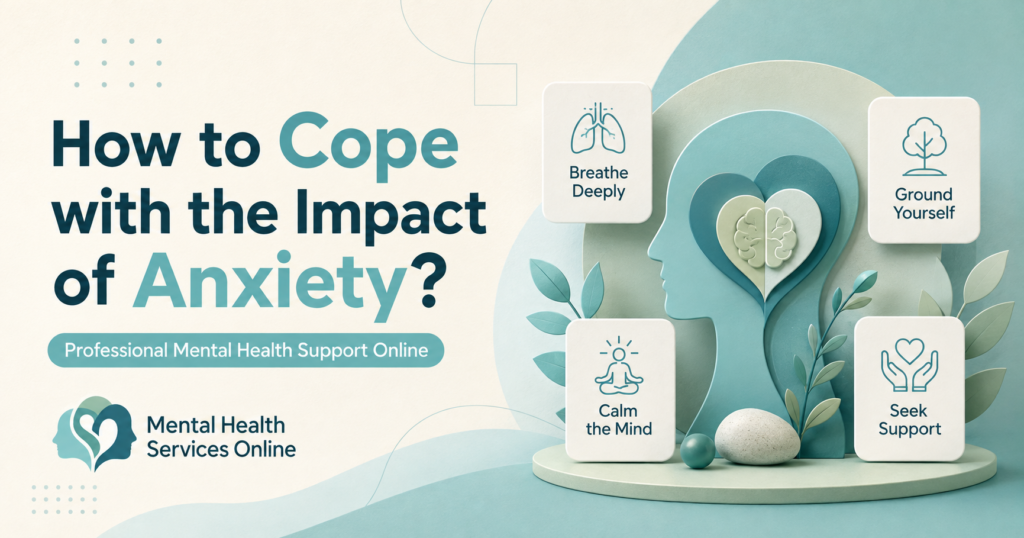
How to Cope with the Impact of Anxiety
Anxiety is the body and mind’s response to perceived danger, pressure, uncertainty, or stress. It can activate physical and psychological changes that prepare a person to respond to a possible threat.
For example, someone may experience anxiety before:
- An examination
- A job interview
- A public presentation
- An important meeting
- A medical appointment
- A difficult conversation
- A major life change
In these situations, mild anxiety may increase alertness and encourage preparation. The feeling usually reduces after the event has passed.
Occasional anxiety versus an anxiety disorder:
Occasional anxiety is usually:
- Connected to a specific situation
- Temporary
- Proportionate to the challenge
- Manageable without major disruption
- Reduced when the stressful event ends
Anxiety may require greater attention when it:
- Continues even when no immediate danger is present
- Feels excessive compared with the situation
- Becomes difficult to control
- Causes frequent emotional or physical distress
- Leads to avoidance
- Disrupts school, work, sleep, relationships, or daily responsibilities
The National Institute of Mental Health explains that anxiety disorders involve more than occasional worry or fear. The anxiety may not disappear, may occur across several situations, and can become worse over time.

Why does anxiety matter?
Anxiety matters because it can affect several areas of life simultaneously.
- Concentration and memory
- Sleep and energy
- Academic and workplace performance
- Confidence and decision-making
- Physical comfort
- Relationships and social participation
- Overall quality of life
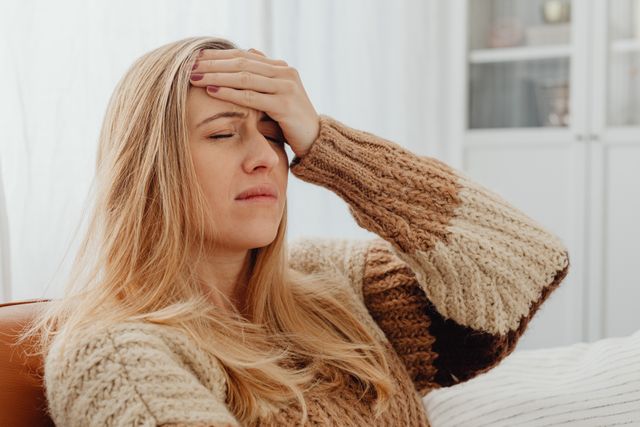
Common Effects of Anxiety
Anxiety does not affect everyone in the same way. Its effects may be emotional, mental, physical, behavioural, academic, social, or professional.
Emotional and mental effects
Common emotional and cognitive effects may include:
- Excessive or persistent worrying
- Irritability
- Difficulty concentrating
- Fear of making mistakes
- Restlessness
- Negative or repetitive thinking
- Difficulty tolerating uncertainty
- Feeling overwhelmed
- Expecting the worst outcome
- Difficulty making decisions
A person may also repeatedly review past conversations, worry about future events, or interpret minor problems as signs of a larger disaster.
Physical effects
Anxiety can activate the body’s stress response. Possible physical effects include:
- Muscle tension
- Rapid heartbeat
- Headaches
- Stomach discomfort
- Nausea
- Sweating
- Trembling
- Tiredness
- Difficulty sleeping
- Feeling restless or unable to relax
The WHO identifies symptoms such as tension, sleep difficulties, nausea, abdominal discomfort, heart palpitations, sweating, trembling, and problems concentrating or making decisions among the possible features of anxiety disorders.
Behavioural effects
Behavioural signs may include:
- Avoiding responsibilities
- Withdrawing from friends or family
- Procrastinating
- Repeatedly checking work
- Seeking constant reassurance
- Leaving stressful situations early
- Refusing unfamiliar activities
- Spending excessive time researching possible risks
- Finding it difficult to begin or complete tasks
How to Cope with the Impact of Anxiety
Coping with anxiety is not about forcing every anxious thought to disappear. It involves learning how to respond to anxiety in ways that support daily functioning, emotional regulation, and long-term well-being.
Step 1: Identify your anxiety triggers
Begin by noticing the situations, thoughts, environments, responsibilities, or physical sensations that usually increase your anxiety.
Keep a brief journal containing:
- What happened
- What you thought
- How your body reacted
- What emotion you experienced
- What you did in response
- Whether your response helped in the long term
For example:
“I received an email asking for a meeting. I immediately thought I had made a serious mistake. My heartbeat increased, and I reread the email repeatedly.”
This record may help you recognise patterns between triggers, thoughts, physical sensations, and behaviour.
Step 2: Name what you are feeling
Instead of saying, “Something is wrong,” describe the experience more accurately:
“I am feeling anxious because I do not know what will happen.”
You can also separate feelings from facts:
“I feel as though I will fail, but that feeling does not prove that failure is certain.”
Naming the emotion can make it feel clearer and more manageable.
Step 3: Practise slow breathing
Anxiety may cause breathing to become fast or shallow. Gently slowing the breath can help the body settle.
Try the following:
- Sit in a comfortable position.
- Relax your shoulders as much as possible.
- Breathe in gently through your nose.
- Exhale slowly without forcing the breath.
- Continue at a comfortable pace for one or two minutes.
Avoid repeatedly taking extremely deep or forceful breaths, as this may cause light-headedness. The aim is to breathe comfortably and gradually, not to force anxiety to disappear.
Step 4: Use grounding techniques
Grounding brings attention back to the present environment.
A simple sensory exercise is to identify:
- Five things you can see
- Four things you can physically feel
- Three things you can hear
- Two things you can smell
- One thing you can taste
Another option is to place both feet on the floor and describe your surroundings using neutral facts:
“I am sitting in a room. The chair is supporting me. I can hear a fan. I can see a window.”
Grounding may interrupt repetitive thinking and help you reconnect with the present moment.
Step 5: Break tasks into smaller steps
Anxiety can make responsibilities appear larger and more difficult than they are.
Instead of writing:
“Complete the whole project.”
Break the responsibility into smaller actions:
- Open the document.
- Read the instructions.
- Write the first heading.
- Work for 15 minutes.
- Take a planned break.
- Continue with the next section.
Completing one manageable step creates progress and may reduce the urge to avoid the task.
Step 6: Challenge unhelpful thoughts
Anxiety often involves treating the worst possible outcome as though it is certain.
Ask yourself:
What evidence supports this thought?
- What evidence does not support it?
- Am I confusing a possibility with a certainty?
- Am I assuming I know what another person thinks?
- Am I expecting perfection?
- What would I say to a friend in the same situation?
- What is a more balanced explanation?
For example:
Unhelpful thought: “I will fail completely.”
Balanced thought: “This may be challenging, but I can prepare, ask for help, and focus on one step at a time.”
Balanced thinking does not mean pretending that difficulties do not exist. It means considering the complete situation rather than focusing only on the worst possibility.
Step 7: Maintain supportive daily habits
Daily habits cannot replace treatment when professional care is needed, but they may support emotional regulation.
Helpful habits include:
- Maintaining a regular sleep schedule
- Eating balanced meals
- Participating in suitable physical activity
- Taking planned study or work breaks
- Staying connected with supportive people
- Reducing excessive caffeine
- Limiting late-night screen use
- Creating realistic daily priorities
- Making time for enjoyable or meaningful activities
Step 8: Seek professional support when needed
Consider speaking with a qualified professional when anxiety is:
- Persistent or worsening
- Difficult to control
- Causing significant distress
- Disrupting sleep
- Affecting attendance or performance
- Damaging relationships
- Leading to frequent avoidance
- Preventing normal daily activities
- Not improving with basic coping strategies

Eight Tips and Reminders for Coping with Anxiety
1. Anxiety is a response, not a weakness
Experiencing anxiety does not mean that you are weak, incapable, or failing. It means that your mind and body are responding to something they perceive as stressful or threatening.
2. Coping skills require practice
A breathing, grounding, or thinking strategy may not feel powerful the first time you use it. Skills generally become easier and more effective through repeated, consistent practice.
3. Avoidance can strengthen anxiety
Avoidance may reduce discomfort immediately, but it can reinforce the belief that you cannot handle the feared situation. When appropriate and safe, gradual participation is often more helpful than complete avoidance.
4. Focus on what you can control
You cannot control every outcome or other people’s opinions. You can usually control your preparation, communication, schedule, effort, boundaries, and response.
5. Replace perfection with realistic expectations
Perfectionism can increase anxiety by making every mistake feel unacceptable. Aim for responsible progress rather than flawless performance.
6. Speak with someone you trust
Talking with a trusted family member, teacher, school counsellor, colleague, manager, or friend may help you organise your thoughts and feel less isolated.
7. Limit anxiety-maintaining habits
Repeated checking, reassurance-seeking, symptom searching, and reviewing conversations may provide brief relief but can keep worry active.
8. Seek guidance when self-help is not enough
Self-help strategies are useful, but needing professional assistance does not represent failure. Early support may prevent anxiety from becoming more disruptive.
How to Evaluate Your Anxiety-Coping Strategies
Not every activity that reduces discomfort temporarily is a healthy long-term coping strategy.
Ask yourself:
- Does this strategy help me return to daily life?
- Does it help me handle the situation more effectively?
- Does it reduce avoidance over time?
- Does it support my health and responsibilities?
- Does it create additional problems?
- Do I depend on it excessively?
- Am I functioning better than I was several weeks ago?
Signs of a helpful coping strategy:
A constructive strategy may help you:
- Return to an important task
- Communicate more calmly
- Make a considered decision
- Reduce avoidance gradually
- Sleep or concentrate more effectively
- Participate in school, work, or social activities
- Tolerate uncertainty more effectively
- Respond rather than react impulsively
When should someone seek professional help?
Professional support should be considered when anxiety is persistent, worsening, difficult to control, or interfering with sleep, education, work, relationships, health, or everyday responsibilities.
Closing
Anxiety can influence thoughts, emotions, physical comfort, relationships, academic achievement, workplace performance, and overall quality of life. However, its impact can often become more manageable when people recognise their triggers, practise effective coping skills, challenge unhelpful thoughts, reduce avoidance, maintain supportive routines, and seek help when necessary.
The most important takeaway is that managing anxiety does not require eliminating every worried thought. It involves learning to respond to anxiety without allowing it to control your choices, responsibilities, relationships, or future.
Begin with one manageable strategy. Practise it consistently, monitor whether it improves your daily functioning, and remember that requesting professional support is a responsible step towards better emotional well-being.
Call to Action
Are anxious thoughts, physical tension, sleep difficulties, repeated worrying, or avoidance affecting your studies, work, relationships, or daily routine?
Professional counselling can help you understand your anxiety, identify its triggers, and develop practical coping strategies suited to your individual circumstances.
Book a confidential consultation today here ( https://mentalawareness.info).